blog
Androgenetic Alopecia – Causes, Diagnosis and Treatment
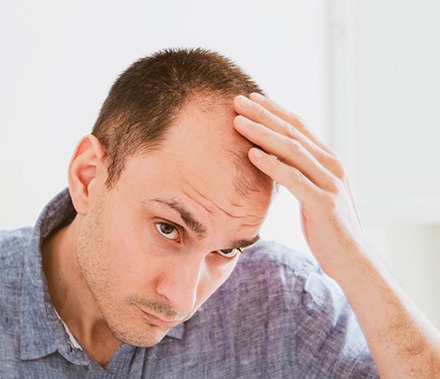
The most common type of hair loss, in both men and women, is Androgenetic Alopecia, more commonly known as baldness. It affects about 80% of men and 40% of women. It is caused by the action of androgenic hormones (testosterone and dihydrotestosterone) in patients who have a genetic predisposition and/or a scalp that is more sensitive to their effects. The Caucasian population is the most prone to this genetic condition, with an incidence four times higher than the African and Asian populations, according to the most recent evidence.
Other causes that currently affect your hair health are directly related to each individual’s lifestyle, such as:
- Eating habits;
- Mental health;
- Medication taken for other underlying conditions;
- Diet: a lack of proteins, vitamins and minerals can weaken the hair strands and eventually lead to hair loss;
- Stress and/or anxiety are also great enemies of hair health and can trigger another type of alopecia, called alopecia areata;
- Hormonal imbalances related to the thyroid, pregnancy, postpartum and menopause are also known causes that affect hair health.
Androgenetic Alopecia presents differently in men and women.
- In men, the assessment tool is the Norwood-Hamilton scale, in which the frontal hairline gradually recedes, starting with triangular-shaped temples. At the same time, density may or may not be lost at the crown and, in more severe cases, across the entire top of the scalp.
- In women, the loss of density can be assessed using the Ludwig scale. In this case, density loss starts in the central area of the scalp and gradually affects the entire top of the head.
Preventive treatment for this condition may involve the use of certain medications, such as Finasteride, Dutasteride or Minoxidil. These medications help with hair loss but are not always the solution and may not even be an option for some patients. Another option, which can be used together with the previous ones, is platelet-rich plasma (PRP). This treatment helps maintain native hair, slowing down the hair loss process and strengthening the existing hair.
For patients who have already lost a considerable amount of hair, the only effective solution is a hair transplant. It is a micro-surgery in which follicular units are extracted from the back and sides of the head – the donor area – and then implanted in the frontal and top regions of the scalp – the recipient area. Because these donor areas are genetically different, they ensure that the transplanted hair will not fall out. FUE (Follicular Unit Extraction) is the technique that allows follicular units to be transplanted with the most natural and effective result.
For this technique, you should seek advice from specialised professionals with experience in the field in order to benefit from excellent treatment.
Other articles
Types of dental braces: differences and characteristics
Learn More
Invisible aligners: advantages and use
Learn More