intro

ORAL IMPLANTOLOGY

Oral implantology is a branch of oral surgery focused on the rehabilitation of missing teeth through the placement of dental implants.
Using advanced techniques and technologies, this specialty restores masticatory function, diction, smile aesthetics and patient self-esteem in a safe, effective and lasting way.

Marcar consulta

Indicações

Consequences of Tooth Loss

The absence of one or more teeth can lead to several functional and aesthetic issues, directly affecting oral health and overall quality of life.
  The main consequences of tooth loss include:

  • Misalignment of adjacent teeth, which tend to shift into the empty space, compromising the bite and the proper alignment of the dental arch.
  • Bone resorption at the site of the missing tooth, leading to a decrease in bone volume and affecting facial support over time.
  • Chewing difficulties, which can impair digestion and limit dietary options.
  • Changes in speech, particularly in cases of multiple tooth losses.
  • Aesthetic concerns, impacting self-confidence and the willingness to smile.


Book appointment

Dental Implants

A dental implant is a titanium or zirconia structure surgically placed into the jawbone to replace the root of a missing tooth.
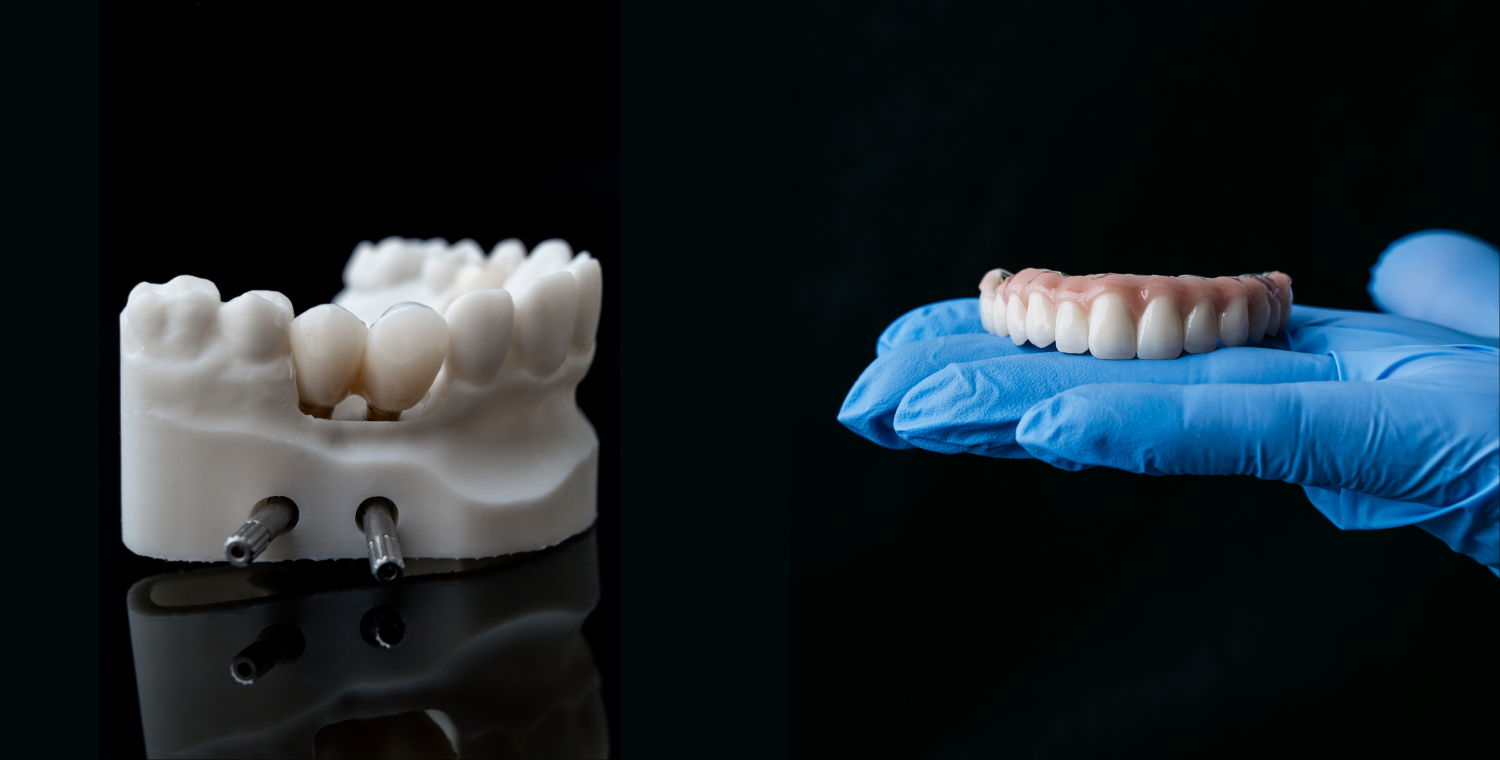
  A crown, bridge, or full fixed prosthesis is then placed over the implant, carefully designed to replicate the appearance and function of a natural tooth.

Dental implants are an effective solution for tooth replacement, offering a fixed, comfortable, and durable structure. They restore chewing function, improve smile aesthetics, preserve adjacent teeth, and help prevent jawbone loss.

Learn More

Who Can Benefit from Dental Implants?

Dental implants are suitable for:

  • Patients missing one or more teeth;
  • Patients using removable dentures who seek a fixed and more comfortable solution;
  • Patients with good oral health and sufficient bone structure to support the implant.

Before starting treatment, a thorough clinical evaluation is carried out to confirm whether the patient meets the ideal conditions for implant placement.

Book appointment

Choosing dental implants offers numerous functional and aesthetic benefits:

  • Permanent replacement of missing teeth with a natural appearance;
  • Improved chewing ability, allowing a more varied and healthier diet;
  • Preservation of the jawbone, helping prevent bone resorption over time;
  • Restored smile aesthetics, boosting self-confidence and emotional well-being;
  • Comfort and stability, with no need for adhesives or frequent adjustments;
  • Protection of adjacent natural teeth, as they don’t require modification.

To ensure patient comfort and peace of mind during implant procedures, IDC.Clinic offers several options:

  • Local anaesthesia with conscious inhalation sedation – Provides deep relaxation, ideal for patients with anxiety or fear of surgery.
  • General anaesthesia in a surgical suite – Indicated for more complex clinical cases or whenever a procedure without conscious awareness is desired. In these cases, the surgery is performed in an operating room located in partner Hospital Installations, previously reserved, ensuring safety, comfort, and complete clinical support.
  • Hilotherm System* – A localized cooling technology that minimizes swelling, pain, and bruising, supporting a more comfortable recovery.

etapas

Stages of dental implant treatment

At IDC.Clinic, our patient manager provide personalised support to each patient, from the very first contact through to the completion of treatment, ensuring dedicated care and continuous guidance throughout the entire process.

Evaluation & Personalised Planning

The first step in implant treatment is a pre-surgical consultation.
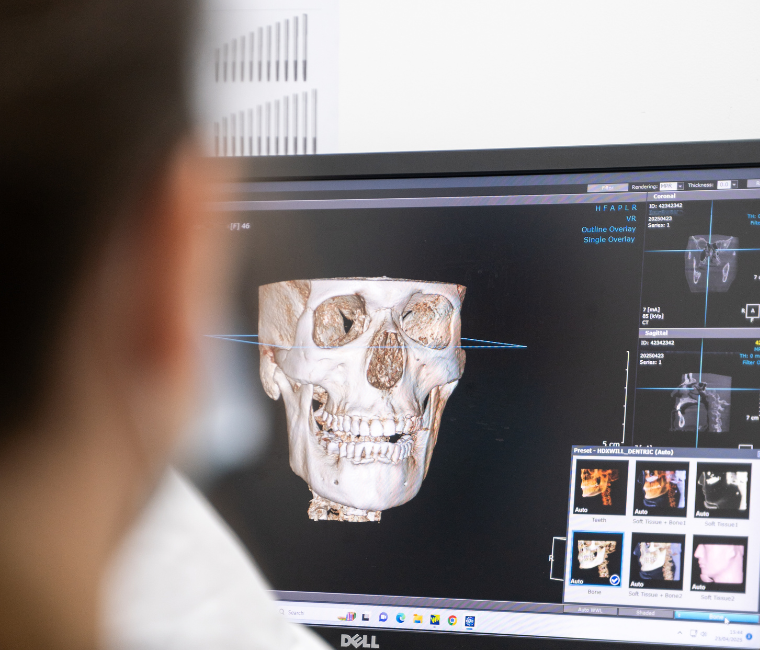
During this phase, the dentist performs a complete oral health assessment, defines treatment objectives, and requests diagnostic exams.
Based on this information, a digital treatment plan is created to match the patient’s needs, ensuring greater precision and safety throughout the process.

Dental Implant Surgery

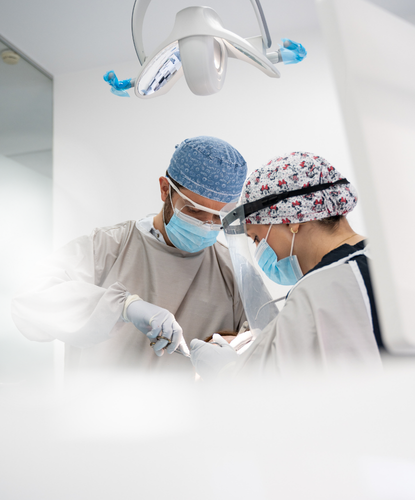
The second stage involves the surgical placement of the dental implants — a safe procedure usually performed under local anaesthesia. It may also be combined with conscious sedation or, in specific cases, general anaesthesia.

Depending on the case, a temporary crown or fixed prosthesis is placed on the same day to provide immediate aesthetics and functionality.

Rehabilitation

Following surgery, the implants undergo osseointegration — a natural process where the implant progressively fuses with the jawbone, ensuring long-term stability and durability.

This integration phase typically lasts 3 to 6 months, depending on the clinical case.
During this time, follow-up appointments are scheduled to monitor healing and support successful implant integration.

Once osseointegration is complete, the temporary structure is replaced with a definitive prosthesis (crown, bridge, or full fixed denture), delivering a functional, comfortable, and aesthetically pleasing solution.

Follow-up and Maintenance

Once the treatment is completed, regular follow-up is essential. Check-up and hygiene appointments are carried out with the goal of preserving:

  • The long-term durability of the implants;
  • The health of surrounding gums and tissues;
  • The function and aesthetics of the restored smile.

Proper oral hygiene at home, combined with clinical follow-up, is essential for the long-term success of dental implant treatment.
Nº sessões

FIXED PROSTHESIS ON IMPLANTS

In cases of total tooth loss or severe dental deterioration, it’s essential to choose a solution that restores not only chewing function but also smile aesthetics and self-confidence.
The most effective and comfortable option in such cases is a fixed prosthesis on implants.

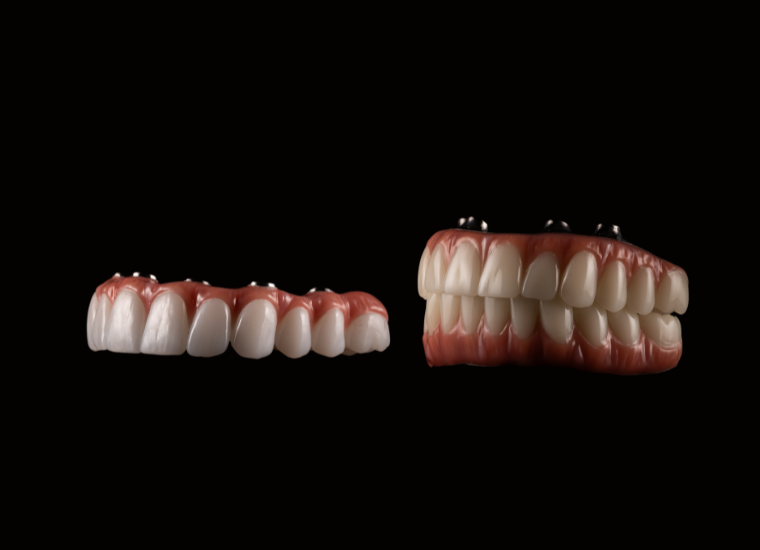
This treatment involves placing 4 to 6 implants per dental arch (depending on the quantity and quality of available bone) to support a fixed prosthesis, typically composed of 12 artificial teeth, with a natural appearance adapted to each patient.

Advanced Techniques in Fixed Prosthesis on Implants

Among the most advanced techniques for fixed prostheses on implantes are the All-on-4, All-on-6 systems, and zygomatic implants, adapted to the clinical needs of each patient.


All-on-4

The All-on-4 system, or four-implant fixed prosthesis, involves the strategic placement of four dental implants to support a full fixed prosthesis. It is recommended for clinical cases with moderate bone loss, allowing for an effective and less invasive rehabilitation.


All-on-6

The six-implant fixed prosthesis, also known as All-on-6, is recommended for clinical cases with good bone availability, allowing for a more solid and stable support. With six dental implants strategically distributed along the arch, this technique provides a strong foundation for full oral rehabilitation, ensuring better distribution of chewing forces and long-lasting results.


Zygomatic Implants

In cases of severe bone loss in the upper jaw, where traditional implants are not feasible, zygomatic implants offer a safe and effective alternative.
These longer implants are anchored in the cheekbone (zygoma), eliminating the need for bone grafting and enabling fixed prostheses even in complex cases.


STAGES OF DENTAL IMPLANT TREATMENT


At IDC.Clinic, our patient manager provide personalised support to each patient, from the very first contact through to the completion of treatment, ensuring dedicated care and continuous guidance throughout the entire process.

Evaluation & Personalised Planning

The first step in implant treatment is a pre-surgical consultation.
  During this phase, the dentist performs a complete oral health assessment, defines treatment objectives, and requests diagnostic exams.
  Based on this information, a digital treatment plan is created to match the patient’s needs, ensuring greater precision and safety throughout the process.


Dental Implant Surgery

The second stage involves the surgical placement of the dental implants — a safe procedure usually performed under local anaesthesia. It may also be combined with conscious sedation or, in specific cases, general anaesthesia.

Depending on the case, a temporary crown or fixed prosthesis is placed on the same day to provide immediate aesthetics and functionality.


Rehabilitation

Following surgery, the implants undergo osseointegration — a natural process where the implant progressively fuses with the jawbone, ensuring long-term stability and durability.

This integration phase typically lasts 3 to 6 months, depending on the clinical case.
  During this time, follow-up appointments are scheduled to monitor healing and support successful implant integration.

Once osseointegration is complete, the temporary structure is replaced with a definitive prosthesis (crown, bridge, or full fixed denture), delivering a functional, comfortable, and aesthetically pleasing solution.

Follow-up and Maintenance

Once the treatment is completed, regular follow-up is essential. Check-up and hygiene appointments are carried out with the goal of preserving:

  • The long-term durability of the implants;
  • The health of surrounding gums and tissues;
  • The function and aesthetics of the restored smile.

Proper oral hygiene at home, combined with clinical follow-up, is essential for the long-term success of dental implant treatment.

Faqs

ESPECIALIDADES

Utilizamos materiais e técnicas de alta qualidade, assim como diferentes protocolos, para garantir os melhores resultados.

Oral Surgery

Oral Surgery

Saber Mais
Orthodontics

Orthodontics

Saber Mais
Oral Rehabilitation

Oral Rehabilitation

Saber Mais
Endodontics

Endodontics

Saber Mais
Dental Veneers

Dental Veneers

Saber Mais
Oral Hygiene

Oral Hygiene

Saber Mais
Occlusion and Bruxism

Occlusion and Bruxism

Saber Mais